
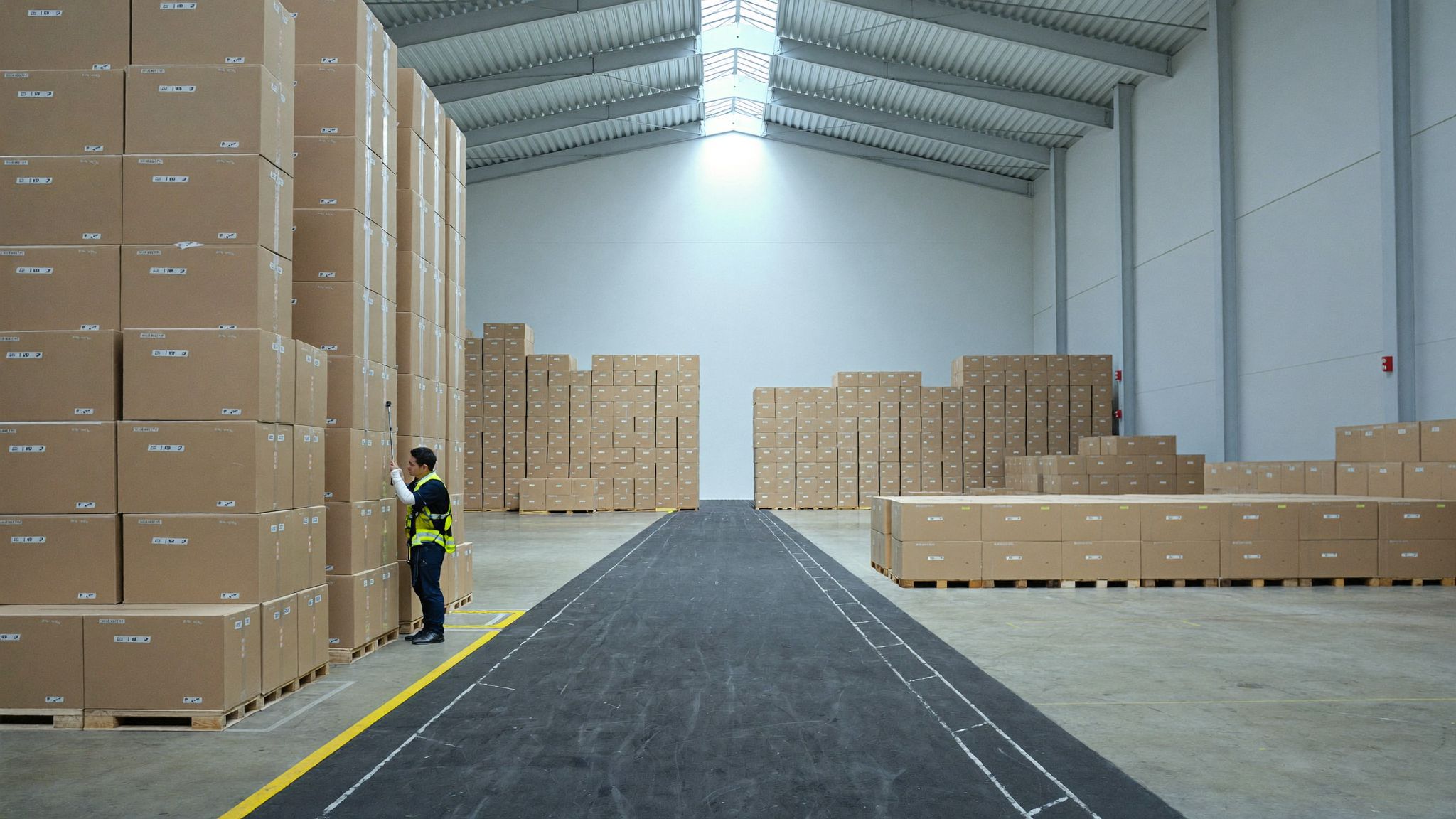
Start with pallet positions, not square feet. Count your pallets, decide whether they can stack, then let the warehouse translate that into space. A shipper who says "I have 120 standard pallets, single-stack only, in and out weekly" gets a firm answer in minutes. A shipper who guesses at square footage usually gets it wrong in both directions.
This guide shows the simple math warehouses use, where shippers most often miscalculate, and what to send so a facility can confirm capacity. For the service itself, see warehousing in Denver.
How do you calculate warehouse space from pallet count?
A standard GMA pallet is 48 by 40 inches, roughly 13.3 square feet of footprint. But you never pay only for the footprint. Aisles, access lanes, and safety clearance mean usable floor space runs well above the raw math when freight is stored on the floor rather than racked.
- Count pallets at peak, not average. Capacity has to survive your busiest week.
- Decide stackability. If pallets double-stack safely, positions can be roughly halved.
- Note the height. Pallets over about 60 inches often will not fit two-high in a standard rack bay.
- Flag oversize or overhang. Anything hanging past the pallet edge consumes a wider slot.
- Add movement room if freight turns often and needs staging space near the dock.
Racked positions vs floor space: which should you ask for?
| Your freight | Ask for | Why | Watch out for |
|---|---|---|---|
| Uniform 48x40 pallets, stackable | Racked pallet positions | Highest density, simplest counting | Height limits per bay |
| Non-stackable or fragile | Racked positions, single-deep | Protects product, keeps counts clean | Costs more per unit stored |
| Oversized, odd shapes, machinery | Floor space by square foot | Floor area is the real constraint | Aisles may be billed too |
| Floor-loaded container freight | Floor space plus palletizing labor | It must be built into pallets first | Labor drives the cost — see unloading cost factors |
| Fast-turning stock, weekly pulls | Positions near the dock | Cuts handling time and cost | Handling fees matter more than storage |
The five mistakes that blow up space estimates
- Using average volume instead of peak. Space is reserved for your worst week.
- Assuming everything double-stacks. Wrap quality and product strength decide this, not preference. If your loads arrive weak, see rewrap vs repalletize.
- Forgetting overhang. A pallet with cartons hanging two inches over each side no longer fits a standard slot.
- Ignoring pallet type. Rental pool pallets and standard wood behave differently on cost and exchange — see CHEP vs standard pallets.
- Leaving out staging. If you ship out weekly, some floor has to stay open for build and load.
Worked example: 3 containers a month
An importer receives three 40-foot containers a month, floor-loaded, and palletizes on arrival. Each container yields about 20 pallets, so 60 pallets inbound monthly. Product releases over four to six weeks, so peak on-hand is roughly 80 to 90 pallets. Product is stackable two-high at 48 inches tall.
Working position need: about 45 racked positions at peak, plus dock-adjacent floor for unloading and pallet build. The importer asks for 50 positions to absorb a late release, and confirms container unloading labor separately. That request is specific enough to price in one pass.
What about trailer holds instead of warehouse space?
If freight is not being touched and can wait, a parked trailer is sometimes the cheaper answer. It costs you visibility and access speed. The trade-offs are laid out in pallet storage vs trailer hold, and the duration question in short-term vs ongoing storage.
Frequently asked questions
How many pallets fit in 1,000 square feet?
Floor-stacked with aisles, expect roughly 40 to 60 single-stacked standard pallets in 1,000 usable square feet. Racking multiplies that by using vertical space, which is why pallet positions are the better unit to quote in.
Should I quote in square feet or pallet positions?
Pallet positions when freight is palletized and uniform. Square feet when it is oversized, irregular, or floor-staged. The pricing implications are in per pallet vs per square foot.
What if my volume changes every month?
Say so up front. Warehouses can reserve a base with flex above it, which is more useful than a fixed number you will breach in month two.
What details does a warehouse need to confirm capacity?
Pallet count at peak, footprint, height, weight, stackability, product type, duration, and first inbound date. Full list: warehouse quote checklist.
Can freight go straight back out instead of into storage?
Yes, that is cross-docking. If the goods only change trucks, you may not need storage at all.
Next step
Send a pallet count, a rough height, and your first inbound date to our team or call 303-289-4343. You will get a capacity answer and pricing the same business day. Full capability list on the services page.
More in Warehousing & storage
Keep reading in this cluster
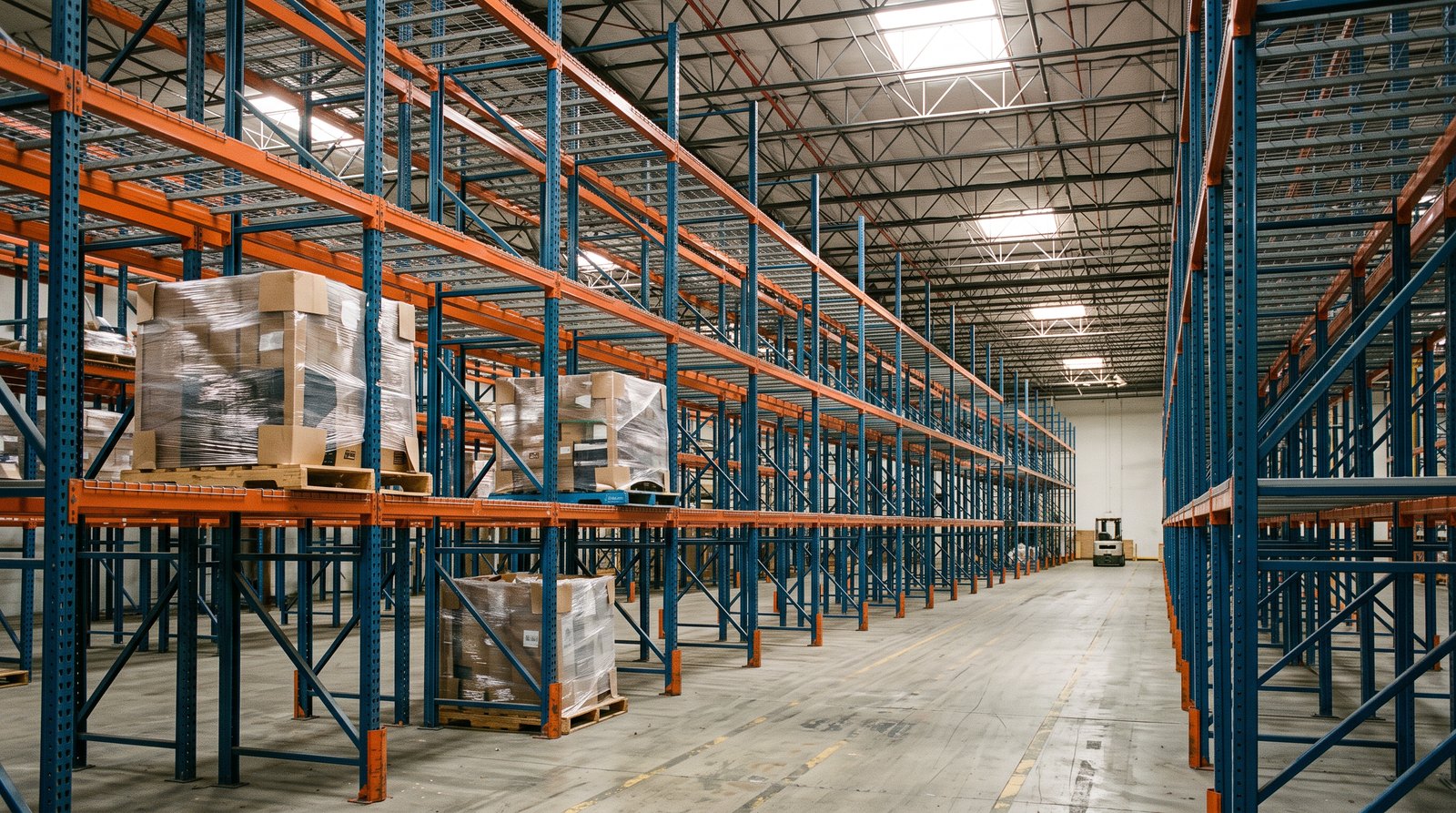
Short-Term vs Ongoing Warehouse Storage in Denver: Which Setup Fits Your Freight?
Compare short-term vs ongoing warehouse storage in Denver. Learn which setup fits your freight based on duration, movement cadence, access, and operational needs.
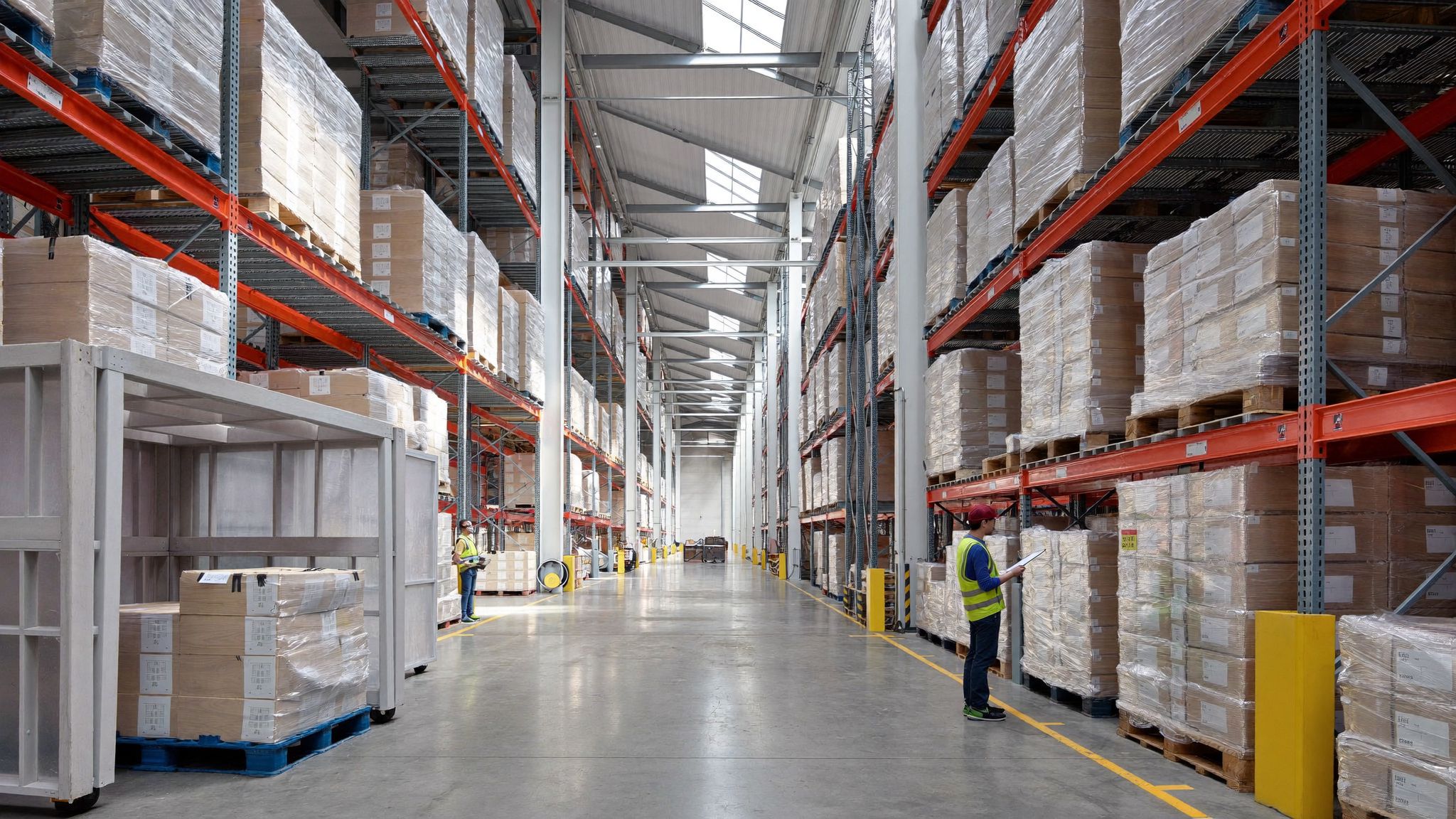
What Is Warehousing? A Plain-English Guide for Denver Shippers
Warehousing means paying a staffed facility to store your freight and handle it in and out. Learn what it includes, how it differs from cross-docking and rework, and when it pays off.
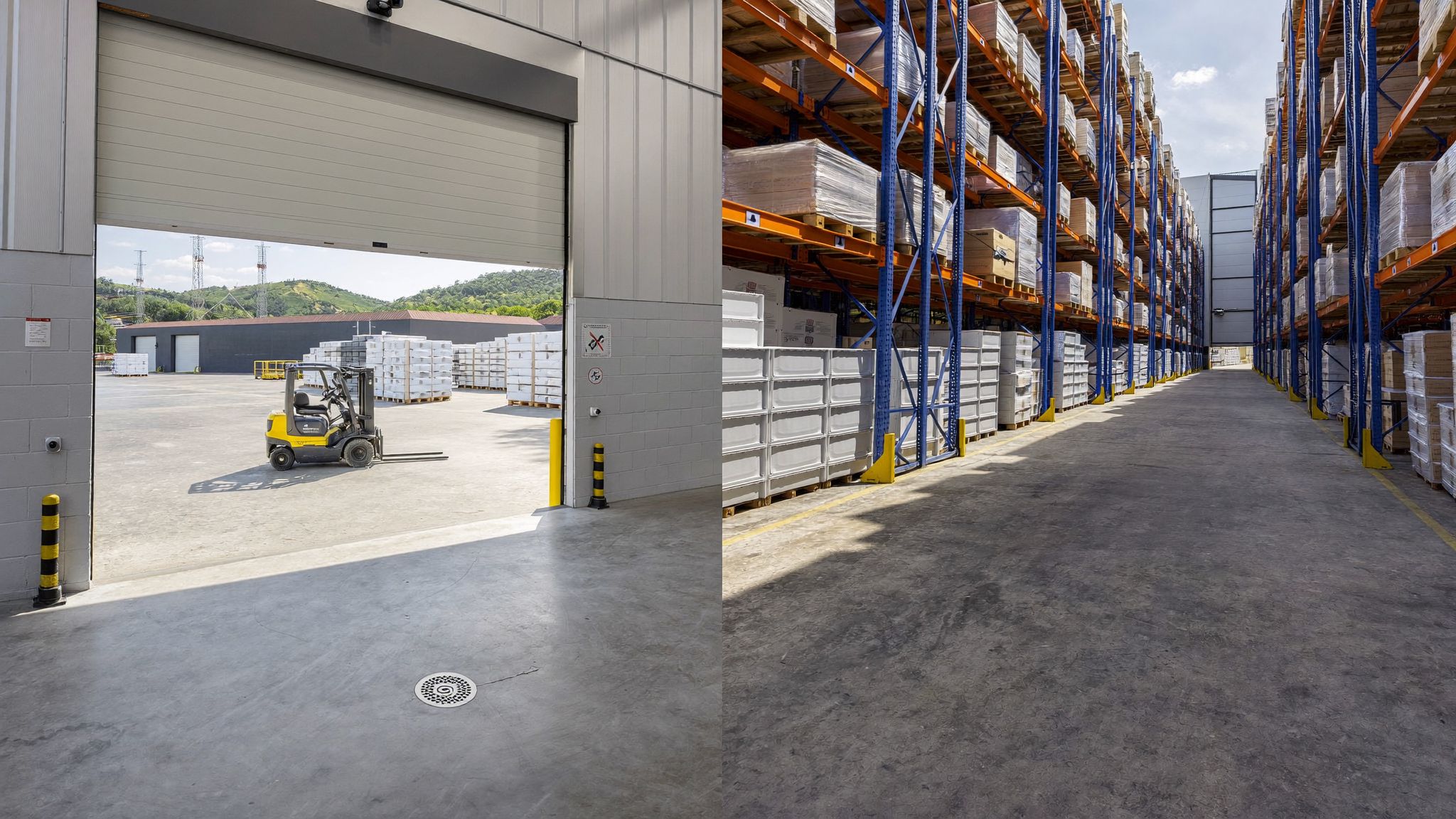
3PL Warehousing vs Self-Storage: Which One Does Your Freight Need?
Self-storage rents a locked box; a warehouse gives you a dock, a forklift, and documented counts. Use this comparison to pick the right option for palletized freight in Denver.
Trailer Storage vs Warehouse Space: When to Make the Switch
A parked trailer is cheap until you need access. Six signals it is time to move freight into racked Denver warehouse space, and how the switch actually works.